

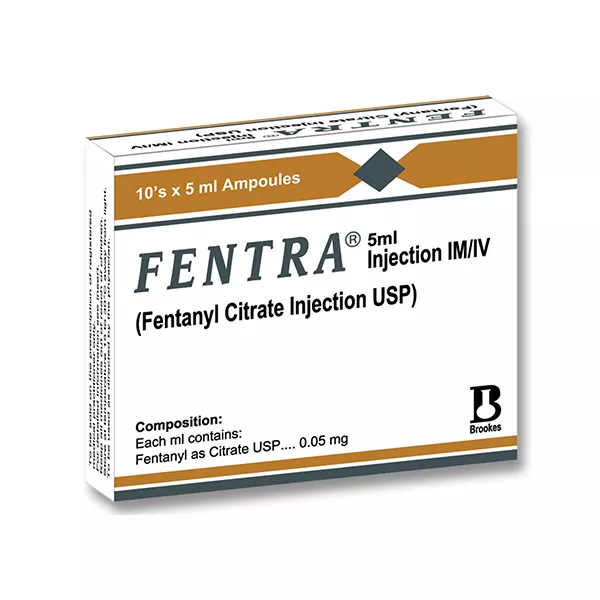
Buy Fentra Injection 0.05 mg 10 Ampx5 mL Online At Best Price In Pakistan
Dosage
Missed Dose
Oral (Sub-Lingual): Take the missed dose as soon as you remember. If it is almost the time for your next dose, skip the missed dose. Do not double your dose to make up for the missed dose. Injection: Since this medicine is usually administered by a qualified healthcare professional before and during a surgical procedure in the clinical/hospital setting, the likelihood of a missed dose is very low. Transdermal: Apply the missed dose as soon as you remember. If it is almost time for your next dose, skip the missed dose. Do not double your dose to make up for the missed one.
Overdose
Oral & Transdermal: Seek emergency medical treatment or contact the doctor in case of an overdose. Injection: Since this medicine is administered in the hospital setting by a qualified healthcare professional, the likelihood of an overdose is very less. However, emergency medical treatment will be initiated by the doctor if an overdose is suspected.
Interactions
Clonazepam (severe)
Bupropion (severe)
Amitriptyline (severe)
Chlordiazepoxide (severe)
Diazepam (severe)
Prescribes
Breakthrough Cancer Pain
This medicine is used in treating the sudden episodes of increased pain in patients suffering from cancer which is known to be stable and persistent otherwise.
Anesthesia
The medicine can be administered as an anesthetic medication during or before major or minor surgical procedures.
Chronic pain
The medicine is used for the treatment of patients suffering from pain since a long time and has developed tolerance to non-opioids even in high doses.
Regional anesthesia
This medicine can be used as an additive with general anesthetic to produce sedation during surgical procedures.
Side Effects
Blurred vision
Chest pain
Confusion
Dizziness
Irregular heartbeat
Lightheadedness
Nausea or Vomiting
Sudden swelling of hands, feet and ankles
Change in mood
Loss of appetite
Warnings
Seizures
Kidney Disease
Liver Disease
Driving or Operating machinery
Drug Dependence
Pregnancy
Breast-feeding
When Not To Use
Allergy
This medicine is not recommended for use in patients with a known allergy to Fentra Injection 0.05 mg 10 Ampx5 mL or any other inactive ingredients present in the formulation.
Respiratory depression
This medicine is not recommended for use in patients with respiratory depression due to the increased risk of worsening of the patient's condition.
Gastrointestinal obstruction
This medicine is not recommended for use in patients with gastrointestinal obstruction including paralytic ileus due to the increased risk of worsening of the patient's condition.
Monoamine oxidase inhibitors (MAOI)
This medicine is not recommended for use in patients taking monoamine oxidase inhibitors (MAOI) due to the increased risk of serious and life-threatening side effects. A time gap of at least 14 days should be maintained between stopping therapy with MAOIs and starting therapy with this medicine.


We want to give you 10% discount for your first order,
Use
discount code at checkout
